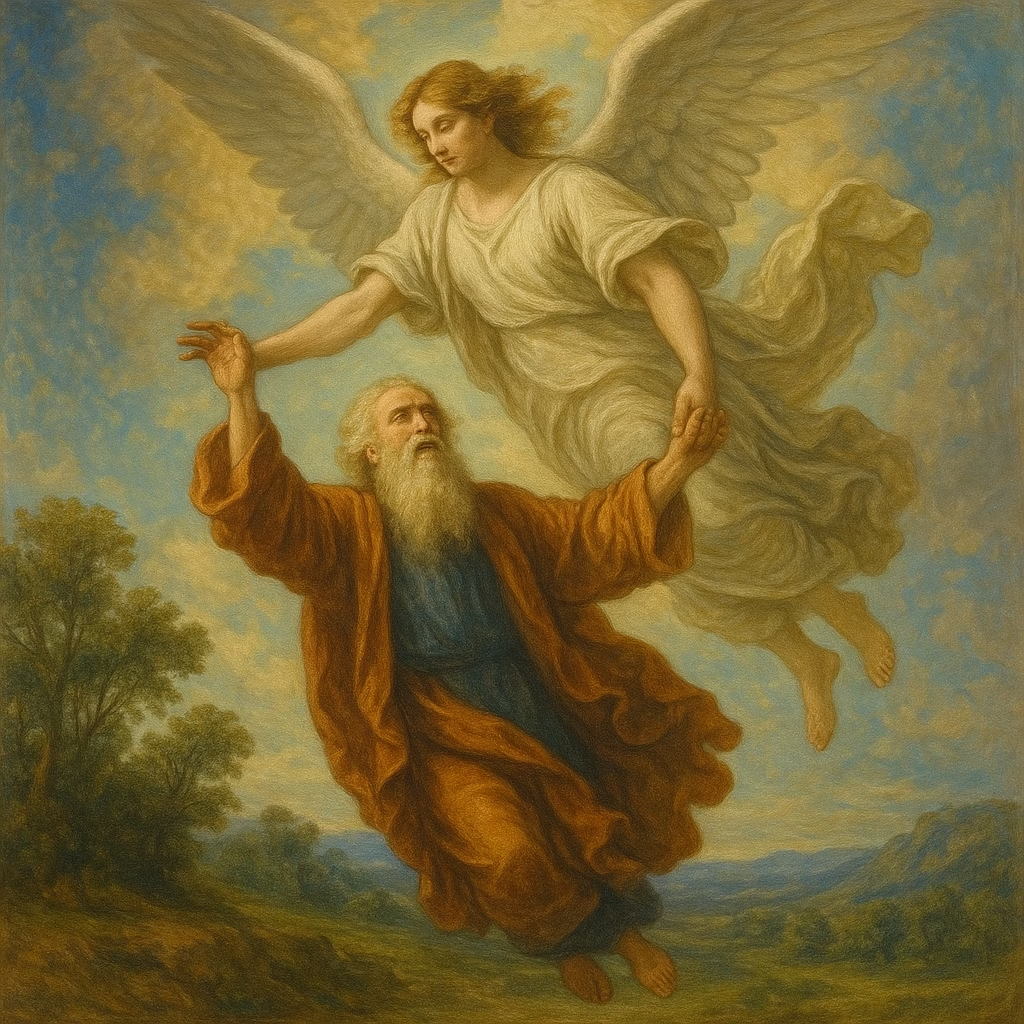
The Sacraments as Signs of God’s Love
The Catholic Church teaches that life with God is a sacred journey filled with signs of His grace. These signs – the sacraments – are not just rituals or symbols; they are living encounters with Christ Himself. Each sacrament is a divine moment when heaven touches earth, when God’s grace enters our lives in a real, transformative way.
In today’s world, where faith often competes with noise and distraction, the sacraments offer something beautifully stable, a rhythm of divine love that grounds our hearts in Christ. Whether it’s the water of Baptism, the bread of the Eucharist, or the vows of Marriage, every sacrament is a doorway to God’s presence.
As we walk through each of the seven sacraments, we rediscover how God continually calls us to deeper relationship, forgiveness, healing, and mission.
1. Baptism – The Beginning of the Christian Life
“Unless one is born of water and the Spirit, he cannot enter the kingdom of God.” – John 3:5
Baptism is the first and foundational sacrament, the gateway into the Christian faith. Through Baptism, we are cleansed from original sin and become children of God, members of His Church.
For most Catholics, Baptism happens in infancy. Yet its grace continues throughout life. Every time we dip our fingers in holy water or make the Sign of the Cross, we are reminded of our baptismal identity: beloved sons and daughters of God.
In a world obsessed with self-definition, Baptism roots our identity not in achievement but in belonging, to Christ. It’s God’s first “yes” to us, long before we can say yes to Him.
2. Confirmation – Sealed with the Holy Spirit
“You will receive power when the Holy Spirit has come upon you.” – Acts 1:8
If Baptism is birth, Confirmation is maturity. It deepens the grace of Baptism and strengthens the soul with the gifts of the Holy Spirit: wisdom, understanding, counsel, fortitude, knowledge, piety, and fear of the Lord.
Many Catholics experience Confirmation as young teens, standing before the bishop to be anointed with sacred chrism. But its meaning is timeless, it’s the moment the Holy Spirit equips us for mission.
In an age that values independence, Confirmation reminds us of holy dependence, on the Spirit who empowers us to live courageously, serve humbly, and witness boldly.
3. The Eucharist – The Heart of Catholic Life
“This is my body, which is given for you.” – Luke 22:19
The Eucharist is the source and summit of the Christian life. In this sacrament, Christ Himself becomes present, body, blood, soul, and divinity, under the appearances of bread and wine.
Every Mass is a miracle. The altar becomes a meeting place between heaven and earth. As the priest consecrates the bread and wine, the same Jesus who walked the roads of Galilee becomes truly present among us.
Receiving the Eucharist is not just symbolic. It is communion with Christ, a sacred union that nourishes the soul, strengthens faith, and unites believers as one Body.
For many Catholics, moments of quiet adoration before the Blessed Sacrament bring peace unlike anything else. It’s there, in silence, that hearts rest in the love of the One who said, “I am with you always.”
4. Reconciliation – The Gift of Forgiveness
“Whose sins you forgive are forgiven them.” – John 20:23
The Sacrament of Reconciliation (or Confession) is one of the most healing experiences in the Christian journey. It’s where mercy becomes personal.
Through the priest, who acts in the person of Christ, we hear the words that renew our souls: “I absolve you from your sins.”
In that moment, shame gives way to freedom, and guilt is replaced by peace. Confession is not about judgment; it’s about love, a divine invitation to start again.
Regular confession keeps our hearts light. It reminds us that God’s mercy is greater than our failures and that no sin is beyond His forgiveness.
5. Anointing of the Sick – Healing in Body and Spirit
“Is anyone among you sick? Let them call the elders of the church to pray over them.” – James 5:14
Suffering can make faith difficult, yet the Anointing of the Sick reveals God’s compassion even in pain. Through holy oil and prayer, the priest invokes the Spirit’s healing, sometimes physical, always spiritual.
This sacrament is not only for the dying but for anyone facing serious illness or surgery. It brings strength, courage, and peace, uniting the sufferer with the suffering Christ.
In hospitals, homes, and chapels, the Anointing reminds us that no one suffers alone. God is present even in our weakness, and through His grace, every cross can become a path to resurrection.
6. Matrimony – The Covenant of Love
“What God has joined together, let no one separate.” – Matthew 19:6
Marriage, in Catholic teaching, is a sacred covenant, not merely a contract. When two people freely vow to love each other for life, their union becomes a visible sign of God’s love for His Church.
In a world where love is often conditional, the sacrament of Matrimony proclaims something revolutionary: love that mirrors Christ’s fidelity. The vows, “for better or worse, for richer or poorer, in sickness and in health”, are promises that echo divine faithfulness.
Married couples live their vocation daily, through patience, forgiveness, laughter, and sacrifice. In the home, love becomes a living sacrament, a domestic church where children first encounter God’s tenderness.
7. Holy Orders – Called to Serve
“The harvest is plentiful, but the laborers are few.” – Matthew 9:37
Holy Orders is the sacrament through which men are ordained to serve as deacons, priests, or bishops. Each shares in the priesthood of Christ in a unique way, ministering to the Church and administering the sacraments.
Ordination is not a reward but a call, a lifelong gift of self to God’s people. Through hands laid in prayer, the Spirit empowers a man to proclaim the Gospel, celebrate the Eucharist, and shepherd souls.
Priests stand as living bridges between heaven and earth, bearing witness that God still calls and still loves through human hearts.
Living the Sacraments Daily
The seven sacraments are not separate moments, but a single thread woven through the Christian life. Each builds on the other, guiding us from birth to eternity, from the waters of Baptism to the oil of Anointing, from the altar of the Eucharist to the vows of love.
Living sacramentally means seeing God in the ordinary, in water, bread, oil, forgiveness, and love. It means realizing that every grace we receive points us back to the Giver.
For Catholics, sacraments are not ancient rituals; they are encounters with the living Christ. Through them, we grow in holiness, community, and joy, learning day by day to trust in God’s plan for our lives.
A Personal Reflection: Grace in Everyday Life
Many believers rediscover their faith through the sacraments. Perhaps it’s the peace felt after Confession, or the joy of watching a child baptized, or the solemn beauty of a wedding Mass.
In my own journey, I’ve found that God often speaks loudest in sacramental moments, not through words, but through grace. When life feels uncertain, I remember: every sacrament is God saying, “I am with you.”
The sacraments are the heartbeat of the Church, and the rhythm of God’s love for us. To receive them is to step again and again into His mercy, His mystery, and His presence.
A Prayer of Gratitude for the Sacraments
Lord Jesus,
You meet us in every sacrament with mercy and love.
Help us to see Your presence in these holy moments –
in Baptism’s promise, in the Eucharist’s gift,
in Reconciliation’s peace, in Marriage’s joy,
in the Anointing’s strength, and in every calling to serve.
Renew our hearts, that we may live as signs of Your grace.
Amen.