By Yellena T. – trusted on TrustInGodsPlan.com
When I first immersed myself in the story of Daniel, I found myself drawn not to the wild visions or the dramatic lion’s den alone, but to the quiet resilience of a young man, taken from home, thrust into a foreign court, yet unwavering. What kind of faith that is. In this article I want to take you through Daniel’s journey: from exile to high office, from young captive to prophetic visionary. I also want to bring it home: how his example can speak to our lives today.
The Setting: Exile, Identity and Purpose
Daniel lived in a time of national crisis. The southern kingdom of Judah was threatened and eventually conquered by the mighty Babylon under Nebuchadnezzar II, and many young men from Judah were taken into exile.
From the opening of his book: “In the third year of the reign of Jehoiakim king of Judah, Nebuchadnezzar king of Babylon came against Jerusalem…” (Daniel 1:1).
Thus Daniel’s story begins in displacement. He and his companions are far from home, immersed in a culture not their own, under a king who expects total loyalty. The exile threatens identity: Hebrew name, Hebrew God, Hebrew culture. In Babylon, Daniel is renamed (Belteshazzar) and subjected to foreign training.
Yet rather than shrink back, Daniel stands firm. One verse stands out: “But Daniel resolved that he would not defile himself with the king’s food, or with the wine which he drank.” (Daniel 1:8)
It is in exile that Daniel’s faith is forged. It is in the foreign court that his allegiance is tested, and declared. His story says to us: faith is not just for the comfortable, but for the displaced and disoriented.
Who Was Daniel? A Brief Portrait
From the biblical record we gather key features of Daniel’s character and calling:
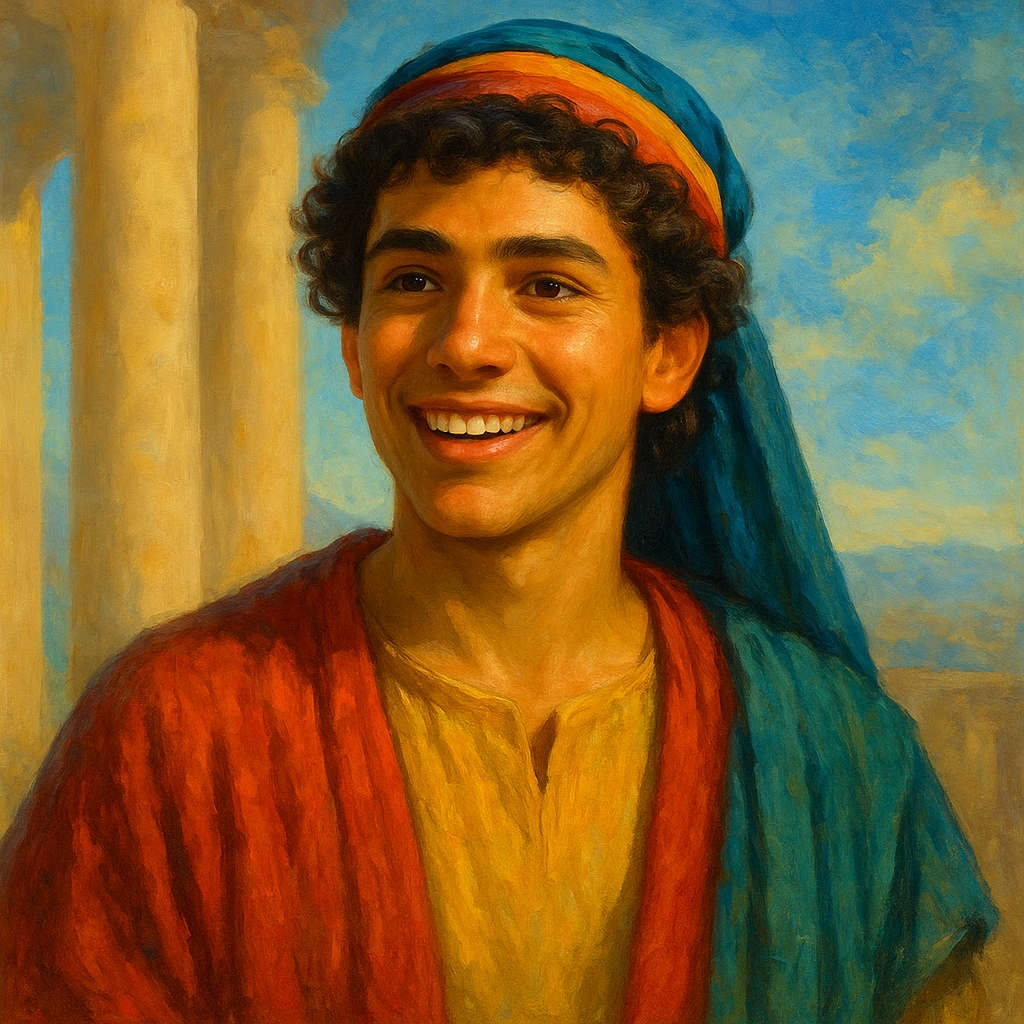
- Young noble of Judah: Daniel and his friends were young men of choice from Judah, taken into the Babylonian court.
- Wisdom & vision-gifted: He distinguished himself in the foreign land, interpreting dreams, receiving visions, showing that God’s sovereignty extended beyond the nation of Israel.
- Faithful witness amid culture: Unlike many, Daniel did not compromise his faith even while serving in high places of a pagan empire.
- Prophetic seer: Although better known for the tales of courage, Daniel also received apocalyptic visions that looked beyond his own era.
In short: Daniel was a faithful expatriate, wise court‐servant, courageous believer, and prophetic visionary.
Key Stories: Daniel’s Faith in Action
Let’s pause and walk through some of the major stories from Daniel’s life, they’re more than narrations; they’re fuel for faith.
a) Standing firm in the king’s court
Daniel 1 opens with the challenge: eat the royal food, assimilate, conform. Daniel refuses. He opts for vegetables and water and finds favour with God. This sets the tone: allegiance to God first, comfort second.
b) Interpreting the king’s dream
In Daniel 2, Nebuchadnezzar dreams of a great statue composed of metals, Daniel interprets it as representing successive empires culminating in God’s eternal kingdom. This reveals two truths: God is sovereign over history; and God equips his people with insight when they serve him faithfully.
c) Lion’s den (Daniel 6)
One of the most dramatic: a decree forbidding prayer to any god but the king’s; Daniel continues to pray to Yahweh; he is cast into a den of lions, and God rescues him. This becomes a vivid image of faith under fire.
d) Visions of beasts and kingdoms
Chapters 7-12 transport us into visionary territory, four beasts, little horn, ram and goat, seventy weeks. These visions remind us that Daniel’s faith doesn’t just handle danger, it anticipates divine victory.
What Daniel Teaches Us Today
Now to the heart: what lessons can we draw from Daniel’s life for our time? How does his exile speak to our reality?
Lesson 1: You can live faithful in exile
Whether you are physically displaced, culturally marginalised, or simply feel “out of place” in a changing world, Daniel says: yes, you can remain faithful. His setting was exile; he didn’t wait to return to act. He acted where he was.
Lesson 2: Identity is secured in God, not just in comfort
Daniel’s refusal to defile himself shows that his identity was rooted in God, not in palace provisions. Are we defined by our job, our culture, our acceptance, or by God? Daniel encourages the latter.
Lesson 3: God is sovereign over empires, circumstances, and seasons
The stories of kings humbled (Nebuchadnezzar, Belshazzar) and Daniel’s visions of empires remind us that even when it seems chaos reigns, God remains in control.
Lesson 4: Courage in the everyday, not just in crisis
It’s tempting to wait for “big moments” to show faith. Daniel prayed three times a day, maintained integrity daily, and then responded heroically when crisis came. That pattern matters.
Lesson 5: Hope amid uncertainty
Daniel’s visions don’t sugar-coat history; they show difficulty and then ultimate victory. If your season is tough, Daniel says: don’t just survive, look for the hope that’s coming.
The Prophetic Dimension: Why Daniel Matters Beyond His Time
One reason Daniel continues to grip readers is because his book doesn’t end with Daniel the man, it ends with the Kingdom of God. His life points forward.
- The apocalyptic literature in chapters 7-12 show that the book is not just historical narrative; it is prophetic vision.
- His name is mentioned by Jesus Christ (quoting Daniel 11:31/12:11 in Matthew 24:15) which underscores his prophetic status.
- For believers today, Daniel bridges the “now” of faith and the “not yet” of God’s kingdom.
In other words: Daniel is not just for students of history, he is for anyone seeking to live faithfully, hope boldly, and remember that the God we serve rules over kingdoms and kings.
My Personal Reflection
As I studied Daniel, I saw parts of my life mirrored in his. Times when I’ve felt exiled, away from home, culture, security, I’ve asked: can I still serve? Can I still trust? Daniel answered: yes. When I’ve been tempted to compromise for the sake of comfort, I remembered his refusal of the king’s food. When uncertainty looms, I’ve held onto his assurance that God reigns.
And I’ve come to believe: faith isn’t reserved for “holy hours”, it’s in the cafeteria decision, the office challenge, the prayer in secret. Daniel lived that every day. May his story spur us to live our stories with the same courage, wisdom, and hope.
How to Apply Daniel’s Lessons in Your Life
Here are practical ways to live out the kind of faith Daniel shows:
- Set your allegiance clearly: Like Daniel, make choices that reflect loyalty to God, even when the world expects otherwise.
- Pray consistently: Daniel didn’t wait for danger; he maintained communion with God. Build a prayer rhythm that sustains you.
- Engage the culture without compromising: Daniel served the king, but served God first. Be involved, but anchored.
- Remember God’s sovereignty: When you feel powerless, recall that Daniel’s God ruled empires. Worship helps shift our perspective.
- Hold the hope of eternity: The visions in Daniel tell us that the “now” is not everything. We live in between, and hope sustains us.
Conclusion: A Prophet for All Seasons
Who was the prophet Daniel? He was a captive youth who became a wise court‐servant; a man of prayer who faced lions; a prophetic visionary who looked beyond his own era. But more than that, he is a model of faith in exile, a light for those living between kingdoms.
If you’re reading this on your own “Babylon” day, whether that’s a literal displacement, a cultural disconnect, a season of waiting, know this: Daniel’s God is still on the throne. Your faith still matters. Your story still counts.
Thank you for joining me on this journey through Daniel’s life. May you go forward encouraged, equipped, and ready to live like a believer in exile, yet always at home in God’s kingdom.